Play mas. Know mas.
Every costume, every pan note, every calypso carries a history. Carnival is an art form, and the people who make it are artists. Here's what goes into it.
Mas
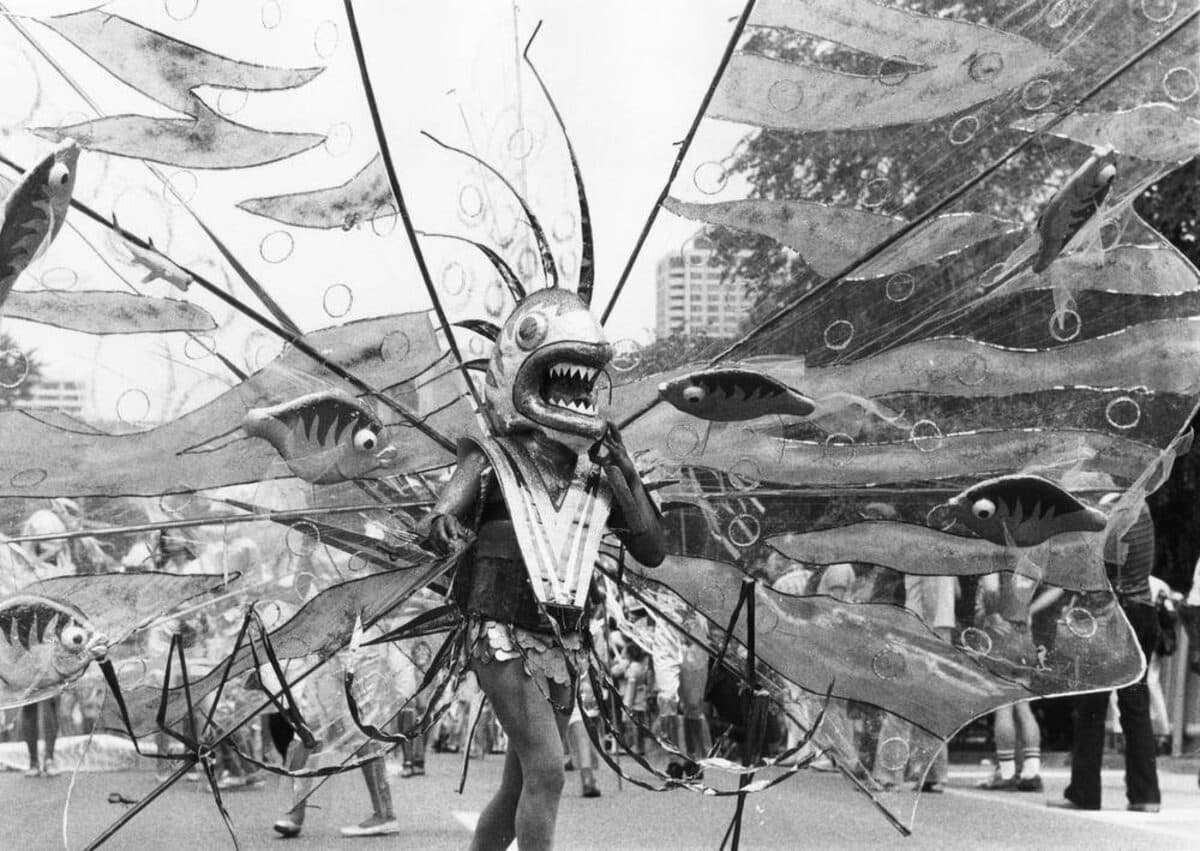
Mas, short for masquerade, is the heart of carnival. Bands of hundreds play mas on the road in sections, each with its own theme and costume. Behind every section are designers, wire-benders and sewers who work for months in the mas camp. The largest pieces, the King and Queen costumes, are built on bent-wire frames, a craft passed from master to apprentice, not taught in any school.
1980 · University Avenue Pan
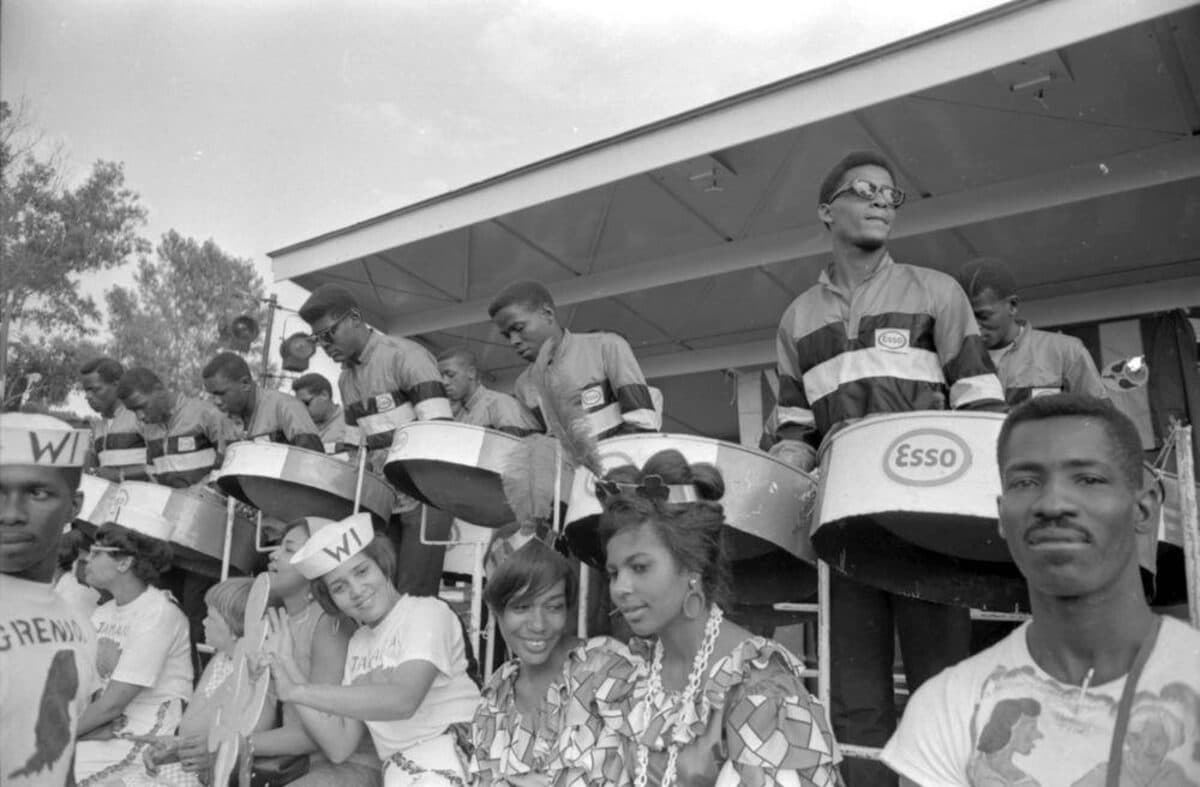
The steelpan is the only acoustic instrument invented in the 20th century [CONFIRM: widely repeated claim; attribute or remove]. It grew out of Trinidad's bamboo bands in the 1930s, after colonial bans on drums. Pioneers hammered 55-gallon oil drums into tuned instruments, and who did it first is still debated. In Toronto, Afropan was founded in 1973, and in 1976 Westview Centennial Secondary School launched the first accredited high-school steelpan program.
1967 · Centre Island Calypso
Calypso is carnival's newspaper: songs of politics, humour and life, sung in the calypso tent. When the Empire Windrush reached England in 1948, Lord Kitchener sang "London Is the Place for Me" on the dock. Toronto has its own champions, including Macomere Fifi, seven-time Calypso Monarch of Canada.
Soca
In the 1970s, Lord Shorty blended calypso with Indian Caribbean rhythms and instruments and called it "sokah," the soul of calypso. Soca became the sound of the road, and the sound of every fete since.
J'ouvert
J'ouvert, from the French jour ouvert (day open), is carnival's pre-dawn opening: mud, paint, powder and drums. It descends directly from Canboulay and carries the memory of the fight for the street.
King and Queen
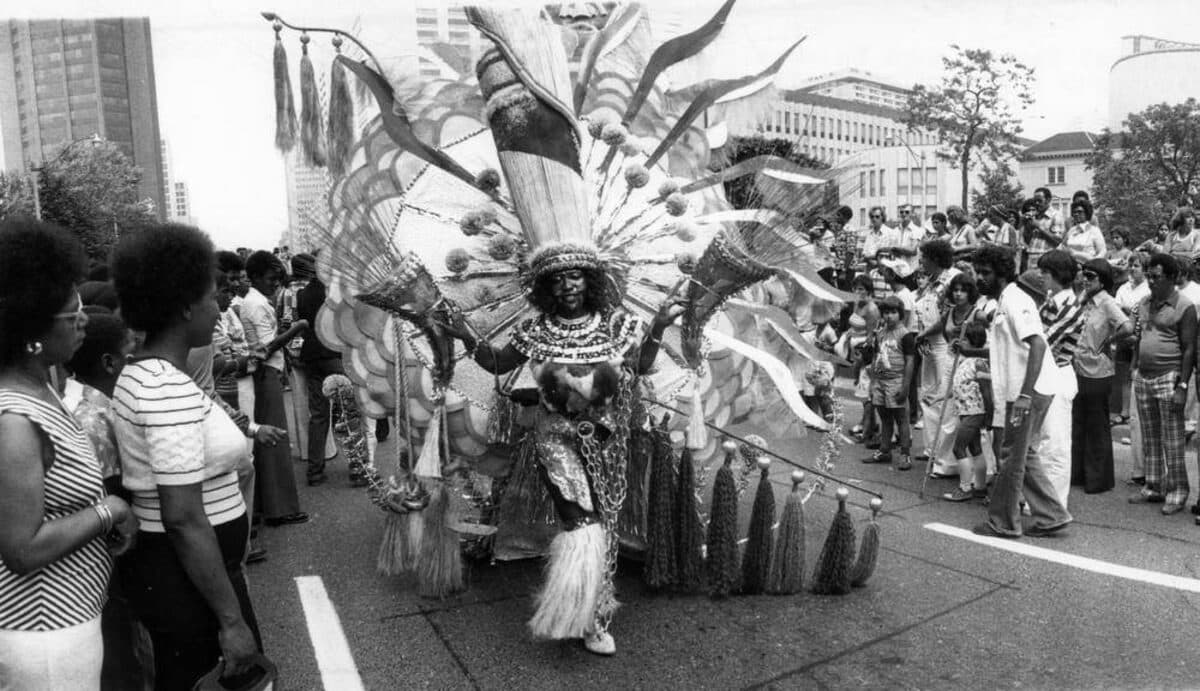
King and Queen competitions crown the biggest costumes of the season. At the first Caribana in 1967, the King and Queen costumes were a gift from the government of Trinidad and Tobago. Today Toronto's Kings and Queens build costumes that stand many feet tall.
1977 · University Avenue